Project Simulation
After extensive research and many tries, simulations were created that realistically modeled the experimental conditions with the use of Abaqus CAE. The goal of the simulations was to show the difference in temperature between the landmine and the surrounding soil and then compare these results across varied materials. One specific type of day was chosen as the model for simulation.
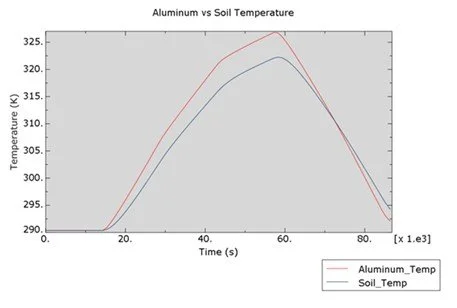
The above plot shows the temperature differences between the aluminum landmine replica and the soil. The left axis is temperature in kelvin, and the bottom axis is the time in seconds. This simulation was modeled for a full 24-hour day. There are a couple trends and important points on the plot to note. First, we see a higher magnitude in heating and cooling rate in the aluminum. This is shown by the slopes of the line and when cooling down the aluminum reaches cooler temperatures than the soil. This phenomenon is explained by the thermal inertia of the materials. Soil has a larger thermal inertia than the aluminum and therefore the soil takes more energy to change its temperature. This along with the almost infinite sink of soil that allows energy to constantly be diffused through the soil cause it to reach lower peak temperatures than the material used.
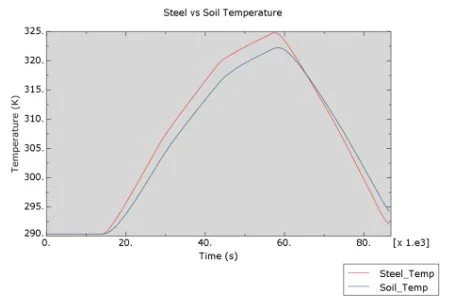
This figure shows a similar plot, but this time it compares the steel to the surrounding soil temperature. The steel used in the simulation was oxidized to match the steel in the experiment. The steel reaches a similar but lower peak temperature than the aluminum but still keeps a noticeable temperature above the soil. The same trends from the previously discussed plot and this one apply and are explained by the same principles. The steel cools slightly faster than the aluminum due to where the temperature measurements on the mine are taken from and the thermal conductivity of the material. Steel has a lower thermal conductivity than aluminum so when the air blows over the steel heat is taken away from the landmine and it takes longer to replenish that heat from the rest of the steel below the top surface.
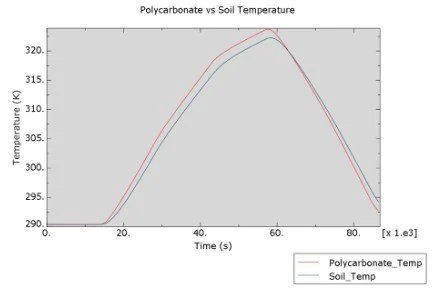
Above is the final simulation plot showing the temperature differences between the polycarbonate and the soil. The polycarbonate has the most similar material properties as the soil when compared to the other materials. This can be seen by the much closer temperatures between the soil and polycarbonate. The polycarbonate heats up and cools down slightly faster than the soil and reaches a higher peak temperature. The point where the polycarbonate becomes cooler than the soil is earlier than that of the aluminum and the steel. This is due to the lag in energy replacement to the surface discussed in the previous figure.